Geotechnical Consulting for Solar Farms: From Site Investigation to Pile Testing
A practical guide to geotechnical consulting for solar farms—from site investigation and soil-pile interaction analysis to foundation design and pile testing for renewable energy projects.
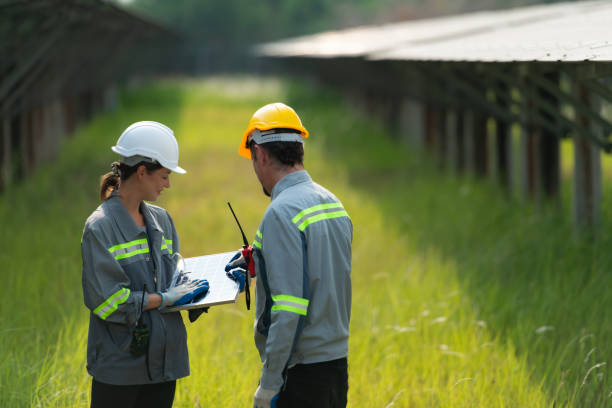
Utility scale solar farms require stable ground conditions to support thousands of solar panels, trackers, and electrical infrastructure. Because these projects cover large land areas, soil conditions can vary significantly across the site. This makes solar farm geotechnical investigation a critical step in renewable energy development.
Geotechnical consultants help solar developers understand soil behaviour, evaluate foundation requirements, and minimise construction risks. From early site investigations to pile testing and construction verification, professional geotechnical consulting for solar farms ensures that solar infrastructure performs reliably over its operational life.
This guide explains how geotechnical engineers support solar farm projects through ground investigation, foundation design, soil pile interaction analysis, and construction testing.
Why Geotechnical Investigation Is Critical for Solar Farm Development
Solar farms often span hundreds of hectares and include thousands of structural foundations. Even small variations in soil strength or groundwater conditions can affect foundation performance. Conducting a proper geotechnical investigation allows developers to understand these ground conditions before construction begins.
Without detailed ground engineering analysis, projects may face foundation failures, construction delays, or costly redesigns.
Unique geotechnical challenges in solar farm projects
Solar farms differ from traditional construction projects because of their scale and repetitive foundation systems. A single project may require tens of thousands of piles to support tracker structures.
Common challenges include:
variable soil conditions across large land areas
shallow rock layers or hard soils affecting pile driving
soft soils that reduce foundation capacity
Understanding these challenges early allows engineers to select suitable foundation systems.
Soil variability across large renewable energy sites
Large solar farm sites rarely have uniform soil conditions. Different sections of the site may contain clay, sand, rock, or fill material.
Geotechnical investigations map these variations and divide the site into ground zones. This information helps engineers optimise foundation design across the entire solar array.
Impact of ground conditions on solar tracker foundations
Solar panels are typically mounted on tracker systems that rotate to follow the sun. These systems rely on stable foundations to maintain alignment and structural integrity.
Weak or compressible soils can lead to settlement or tilting, which may reduce energy generation and increase maintenance requirements.
Differences between solar and wind site investigations
While both solar and wind projects require ground investigation, the engineering requirements are different. Wind turbines rely on deep foundations designed for large structural loads.
Solar farms use lighter foundations but require far more installations across a wider area. This makes large scale soil mapping and testing essential for solar projects.
Risks of inadequate ground investigation for EPC contractors
Engineering procurement and construction contractors rely on accurate geotechnical data to plan foundation installation. If ground conditions are not properly investigated, contractors may face unexpected problems during construction.
Potential risks include:
refusal during pile driving
inadequate pile capacity
delays caused by redesign
Detailed investigations help reduce these risks.
Role of renewable energy geotechnical consultants
Renewable energy geotechnical consultants provide technical guidance throughout the project lifecycle. They plan investigations, analyse soil data, and recommend foundation solutions suited to site conditions.
Their expertise helps ensure that foundation systems meet structural requirements while remaining cost efficient.
Early stage feasibility studies for solar farm land selection
Before land is selected for solar development, geotechnical consultants may conduct preliminary feasibility assessments. These studies review geological maps, terrain conditions, and potential ground risks.
Early stage assessments help developers avoid sites with severe geotechnical constraints.
Site Investigation and Ground Characterisation for Solar Projects
A well planned investigation program is essential for understanding ground conditions across a solar farm site. The goal is to collect reliable data that supports engineering analysis and foundation design.
Geotechnical consultants combine field investigations, laboratory testing, and geological interpretation to create a detailed ground model.
Planning a solar farm geotechnical investigation program
Investigation programs are designed based on the size of the project and expected ground conditions. Engineers determine the number of boreholes, test pits, and testing locations required.
The program must provide adequate coverage across the entire solar farm area.
Boreholes, test pits, and in situ soil testing methods
Field investigations typically include boreholes and test pits to collect soil samples and observe subsurface conditions. Engineers also conduct in situ tests to measure soil strength and density.
Common testing methods include:
standard penetration testing
cone penetration testing
field density testing
These methods help determine soil properties relevant to foundation design.
Geophysical surveys for large renewable energy sites
Geophysical surveys are often used to supplement traditional site investigations. These surveys use specialised equipment to detect underground features across large areas.
They help identify rock layers, buried structures, and variations in soil conditions.
Laboratory testing for soil strength and settlement characteristics
Soil samples collected during field investigations are analysed in laboratories. Testing determines properties such as shear strength, compressibility, and moisture content.
These parameters are used to evaluate settlement behaviour and foundation capacity.
Mapping soil stratigraphy across solar array zones
Geotechnical engineers develop subsurface models that show the sequence of soil layers across the site. This mapping process identifies zones with similar soil characteristics.
Dividing the site into geotechnical zones allows engineers to tailor foundation designs to local conditions.
Assessing groundwater and drainage conditions
Groundwater levels can significantly influence foundation performance and construction activities. High groundwater conditions may affect pile installation and long term soil behaviour.
Engineers assess groundwater levels and evaluate drainage patterns across the site.
Delivering a geotechnical interpretative report for solar developers
All investigation results are compiled into a geotechnical interpretative report. This document explains soil conditions, engineering analysis, and foundation design recommendations.
Solar developers and EPC contractors use this report to guide project design and construction planning.
Foundation Design and Soil Pile Interaction Analysis
Foundation systems are one of the most important engineering components of a solar farm. Each solar panel structure must be securely anchored to the ground to withstand wind loads and environmental conditions.
Geotechnical engineers analyse soil behaviour to ensure that foundation systems perform reliably.
Types of solar farm foundations
Several types of foundations are commonly used in solar farm projects depending on soil conditions and structural requirements.
Common foundation systems include:
driven steel piles
helical screw piles
ballasted systems
shallow concrete foundations
The choice depends on soil strength, construction methods, and project cost considerations.
Soil pile interaction analysis for solar tracker systems
Solar tracker systems apply both vertical and lateral loads to foundations. Engineers perform soil pile interaction analysis to evaluate how piles behave under these loads.
This analysis considers soil stiffness, pile embedment depth, and potential ground movement.
Determining pile embedment depth and lateral capacity
Pile embedment depth must be sufficient to resist uplift and lateral forces caused by wind loading. Engineers calculate the depth required to achieve adequate stability.
Proper embedment also ensures that piles are anchored within competent soil layers.
Managing settlement and differential movement risks
Uneven settlement across a solar farm can cause misalignment of tracker systems. This can reduce efficiency and increase maintenance costs.
Geotechnical engineers evaluate settlement behaviour and design foundations to minimise differential movement.
Designing foundations for wind loading on solar panels
Solar panels and trackers act as large surfaces exposed to wind forces. These forces create uplift and lateral loads that must be resisted by the foundation system.
Engineers design foundations that safely transfer these loads into the ground.
Optimising foundation design to reduce project costs
Efficient foundation design can significantly reduce construction costs. By analysing soil conditions carefully, engineers may optimise pile lengths or spacing.
This optimisation helps developers balance structural performance with project budgets.
Integration with structural and civil design teams
Foundation design must be coordinated with structural engineers and civil designers. This ensures that tracker systems, electrical infrastructure, and site grading plans are compatible with geotechnical recommendations.
Collaboration between disciplines helps ensure efficient project delivery.
Pile Testing and Construction Verification for Solar Farms
Pile testing is an essential step in verifying that foundation systems perform as expected under site conditions. Testing provides real world data that confirms design assumptions.
This process helps identify potential issues before large scale pile installation begins.
Importance of pile testing before large scale installation
Before installing thousands of piles, engineers typically conduct preliminary testing to confirm capacity and installation methods.
Testing helps determine whether design assumptions are accurate and whether modifications are needed.
Static and dynamic pile load testing methods
Different testing methods may be used depending on project requirements.
Common methods include:
static compression testing
dynamic pile testing
lateral load testing
These tests measure how piles respond to applied loads.
Pull out testing for solar tracker foundations
Solar tracker foundations must resist uplift forces generated by wind acting on panel surfaces. Pull out testing evaluates the ability of piles to resist these forces.
Results help confirm that the foundation system can safely support the solar structures.
Quality assurance during solar pile installation
Quality control is important when installing large numbers of piles. Engineers monitor installation depth, alignment, and pile performance.
This ensures that piles are installed according to engineering specifications.
Verifying design assumptions with field test results
Field testing results are compared with predictions from geotechnical analysis. If results differ from expectations, engineers may adjust foundation designs.
Verification helps ensure that construction proceeds with reliable engineering data.
Managing geotechnical risks during construction
Construction activities can expose unexpected ground conditions. Geotechnical consultants provide ongoing support during installation to manage these risks.
Their guidance helps prevent delays and structural issues.
Engineering certification and reporting for project compliance
Once testing and installation are completed, engineers provide certification confirming that foundations meet design requirements.
These reports support regulatory compliance and project documentation.
End to End Geotechnical Consulting for Renewable Energy Projects
Renewable energy developments benefit from continuous geotechnical support throughout the project lifecycle. From early feasibility studies to construction monitoring, consultants help manage ground related risks.
A comprehensive geotechnical strategy improves project efficiency and long term infrastructure performance.
Supporting solar developers from feasibility to construction
Geotechnical consultants like Geoslope assist developers in evaluating land suitability, conducting site investigations, and designing foundation systems.
This support ensures that projects are technically viable before construction begins.
Coordinating with EPC contractors and civil engineers
Successful solar projects require collaboration between engineers, contractors, and project managers. Geotechnical consultants coordinate with these teams to integrate ground engineering into construction planning.
This coordination reduces misunderstandings and technical risks.
Risk mitigation strategies for large renewable energy sites
Large scale renewable energy projects often face uncertainties related to ground conditions. Engineers develop risk mitigation strategies to address these uncertainties.
These strategies may include additional testing or adaptive construction methods.
Managing geotechnical uncertainties in remote project locations
Many solar farms are located in remote regions where site data is limited. Geotechnical consultants help manage these uncertainties through careful investigation and engineering analysis.
Their expertise helps developers avoid costly surprises during construction.
Delivering bankable geotechnical reports for project financing
Investors and financial institutions often require detailed geotechnical reports before funding renewable energy projects.
Bankable reports provide confidence that foundation systems are reliable and that ground risks have been addressed.
Long term ground performance monitoring strategies
Even after construction, ground conditions may continue to evolve. Monitoring programs allow engineers to track settlement or movement over time.
Long term monitoring supports safe and reliable solar farm operation.
Conclusion
Utility scale solar farms rely heavily on accurate geotechnical data and well engineered foundation systems to ensure reliable performance. From early site investigation and soil profiling to soil pile interaction analysis and pile testing, geotechnical consultants play a vital role in managing ground related risks across renewable energy developments. By understanding site conditions, designing appropriate foundation systems, and verifying construction performance, engineers help ensure that solar infrastructure remains stable throughout its operational life.
For solar developers and EPC contractors, engaging experienced geotechnical consulting for solar farms helps optimise foundation design, reduce construction uncertainties, and keep renewable energy projects on schedule. A comprehensive geotechnical strategy ultimately supports cost efficient solar infrastructure and sustainable energy generation.
If you are planning a solar project and require expert support for solar farm geotechnical investigation, contact us today to discuss your project and request a professional geotechnical consultation.
FAQs
What is a solar farm geotechnical investigation?
A solar farm geotechnical investigation evaluates soil and ground conditions across the proposed project site to determine suitable foundation solutions for solar panels and tracking systems.
Why is soil-pile interaction analysis important for solar farms?
Soil-pile interaction analysis ensures that driven or screw piles supporting solar trackers can resist wind loads, settlement, and lateral forces without excessive movement.
What types of foundations are used for solar farms?
Common solar farm foundation types include driven steel piles, helical screw piles, ballasted systems, and shallow concrete foundations depending on soil conditions.
When should pile testing be conducted in solar farm projects?
Pile testing is typically conducted during early construction stages to verify foundation capacity and confirm the design assumptions used during geotechnical analysis.
How do geotechnical consultants support renewable energy developers?
They provide site investigations, ground modelling, foundation design recommendations, pile testing verification, and construction-phase geotechnical support.