
Site Classification Reports Explained: What Builders and Engineers Need to Know
Learn how site classification reports work in Australia, what AS 2870 soil classes mean, and how geotechnical site classification informs slab and footing design decisions.
Introduction
Site classification is one of the most important early steps in residential construction across Australia. Before slab and footing systems can be designed, the ground conditions must be assessed to understand how the soil will behave over time. This step directly influences structural performance and long-term durability.
Builders and engineers rely heavily on-site classification reports to design structures that comply with Australian Standards. These reports inform slab thickness, reinforcement, footing depth, and drainage requirements. Without accurate classification, even well-designed buildings can experience movement and damage.
Site classification is not just paperwork for approvals. It is a risk management tool that helps control ground movement caused by soil reactivity. When done correctly, it protects structures, budgets, and reputations.
What Is a Site Classification Report in Australia?
A site classification report is a geotechnical document that defines the expected ground movement of a site due to soil moisture changes. It focuses primarily on soil reactivity, particularly in clay soils that expand and shrink. The outcome is a site class assigned under AS 2870.
AS 2870 is the Australian Standard that governs residential slabs and footings. Compliance with this standard is mandatory for most residential construction projects. The site classification provides the foundation for all structural design decisions under AS 2870.
Site classification forms part of a broader geotechnical investigation. While it focuses on soil reactivity, it often sits alongside other assessments such as bearing capacity, fill depth, and groundwater observations. Together, these inputs support safe and compliant design.
How Soil Reactivity Testing Determines Site Class
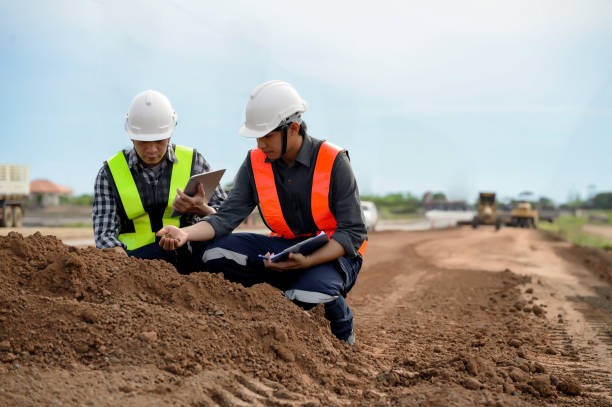
Soil reactivity testing involves a combination of field investigation and laboratory analysis. Engineers collect soil samples through boreholes or test pits at strategic locations across the site. These samples are then tested to assess their behaviour when moisture levels change.
Clay soils play a major role in site classification. When clay absorbs moisture, it swells, and when it dries, it shrinks. The degree of this movement determines the reactivity level and ultimately the site class assigned under AS 2870.
Site conditions can vary across a single lot due to changes in soil profile, fill placement, or drainage patterns. This is why multiple test locations are often required. Proper investigation ensures the classification reflects the most adverse conditions likely to affect the structure.
Understanding AS 2870 Site Classes and Their Implications
AS 2870 defines several site classes based on soil reactivity and expected ground movement. These classes range from non-reactive sites to highly reactive and problematic conditions. Each class has direct implications for slab and footing design.
Common site classes include A, S, M, H1, H2, E, and P. Class A and S sites generally have minimal movement, while M and H classes indicate increasing levels of reactivity. E and P classes represent extreme or problematic conditions that require special design consideration.
If a site classification is underestimated, the structural risk increases significantly. Slabs and footings may not be designed to accommodate actual ground movement, leading to cracking, distortion, and long-term damage.
Typical site classes and design impact
Low reactivity sites require simpler footing systems
Moderately reactive sites need enhanced reinforcement
Highly reactive sites demand engineered slab solutions
How Builders and Engineers Use Site Classification in Design
Builders and engineers use site classification reports to set expectations for footing performance. The assigned site class determines how much ground movement the structure must tolerate without damage, and this information feeds directly into structural calculations. Reports prepared by experienced geotechnical consultants such as Geoslope provide the technical foundation needed for compliant and reliable slab design.
Coordination between geotechnical engineers, structural engineers, and construction teams is essential. The geotechnical consultant defines the ground behaviour, the structural engineer designs the slab accordingly, and the builder implements the design on site. Alignment between all parties reduces risk.
Design assumptions also play a key role. Site classification reports often include assumptions about drainage, finished ground levels, and landscaping. Builders must follow these assumptions during construction to ensure the slab performs as intended.
Risks of Incorrect or Incomplete Site Classification
Incorrect or incomplete site classification can lead to serious consequences. One of the most common outcomes is slab movement and cracking. These issues may appear months or years after construction, often resulting in disputes and costly repairs.
There are also significant cost and liability implications for builders and designers. If a site is under classified, rectification works can be expensive and disruptive. Responsibility may fall on multiple parties, increasing legal and insurance risks.
In some cases, reclassification or additional investigation is required. Changes to site levels, drainage conditions, or building footprint can all affect soil behaviour. When conditions change, the original classification may no longer be valid.
Conclusion
Site classification reports are essential design tools that guide safe and compliant residential construction. They provide critical insight into soil reactivity and help engineers design slabs and footings that can manage ground movement over time. Treating site classification as more than a checkbox ensures better structural performance and fewer long-term issues. Engaging experienced geotechnical consultants early and encouraging collaboration between all project teams leads to durable, compliant outcomes. If you need expert advice or a reliable site classification report for your project, contact us today to discuss your requirements.
FAQs
What is a site classification report used for?
It defines the soil reactivity of a site under AS 2870 and informs slab and footing design to manage ground movement.
Is site classification mandatory for residential construction in Australia?
Yes, site classification is required for most residential building approvals and structural designs.
How does clay soil affect site classification?
Clay soils expand and contract with moisture changes, which increases reactivity and influences footing design requirements.
Can a site classification change over time?
Yes, changes in drainage, vegetation, or moisture conditions can affect soil behaviour and may require reassessment.
Who should prepare a site classification report?
Site classification reports should be prepared by qualified geotechnical engineers with experience in local soil conditions and AS 2870 standards.