
Geotechnical Engineering for Landslip Sites: Assessment, Design & Mitigation
Expert geotechnical engineering for landslip sites including assessment, stabilisation design, and risk mitigation consultancy. Learn how GeoSlope delivers accountable solutions for complex slope failures.
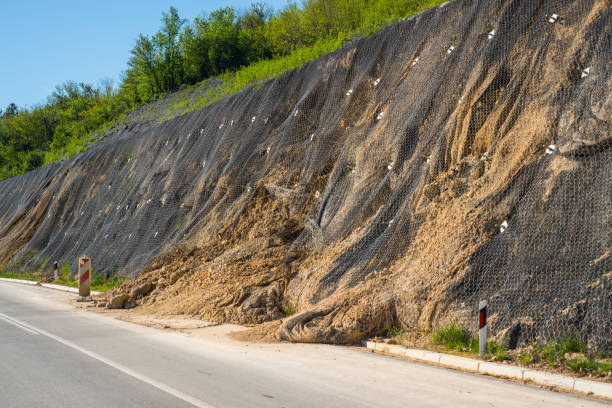
Introduction
Landslip risk is a critical challenge in geotechnical engineering and asset management. Unstable slopes can threaten infrastructure, buildings, and public safety if not properly assessed and managed. These risks often increase over time due to weather, groundwater changes, or land use modifications.
When landslip sites are inadequately assessed or treated with reactive design solutions, the consequences can be severe. These include ongoing ground movement, repeated repair costs, legal exposure, and long-term asset damage.
GeoSlope is a specialist geotechnical engineering consultancy delivering end-to-end accountability for landslip projects. From investigation through to design and mitigation, GeoSlope provides expert-led solutions for complex slope instability challenges.
Understanding Landslip Risk and Failure Mechanisms
Landslips occur due to a combination of geological and environmental factors. Common causes include weak soil or rock layers, rising groundwater levels, increased surface loading, and changes in vegetation or drainage patterns.
Different types of landslip failures affect infrastructure and assets in different ways. These may include shallow soil slips, deep-seated rotational failures, translational slides, or progressive slope movements that develop over time.
Site-specific geotechnical interpretation is essential. Every landslip site behaves differently, and accurate assessment requires an understanding of local ground conditions rather than generic assumptions.
Geotechnical Engineering Assessment for Landslip Sites
Geotechnical assessment for landslip sites involves a structured and detailed investigation process. The goal is to understand subsurface conditions and identify the mechanisms driving instability.
Scope of Geotechnical Landslip Services
Site investigation and subsurface characterisation
Groundwater assessment and monitoring
Soil-structure interaction analysis
Field data from boreholes, test pits, monitoring instruments, and laboratory testing is translated into engineering parameters. These parameters form the basis for reliable analysis and stabilisation design.
Consultant-Led Stabilisation Design Strategies
Stabilisation design for landslip sites relies heavily on professional engineering judgment. Each site requires tailored solutions that respond to its specific risk profile and failure mechanisms.
Overview of Mitigation Options
Retaining systems such as walls or anchored structures
Slope regrading and soil reinforcement techniques
Drainage and groundwater control measures
Effective designs consider constructability and long-term performance. Solutions must be practical to build while providing durable risk reduction over the life of the asset.
Landslip Risk Mitigation Consultancy and Engineering Accountability
Consultant ownership is essential in landslip risk mitigation. The same geotechnical engineer should guide the project from assessment through to implementation to ensure continuity and accountability.
Managing design risk involves clearly defining assumptions, applying appropriate safety factors, and understanding uncertainty in ground conditions. These elements are critical to responsible engineering decision-making.
Close coordination with civil designers, contractors, and asset owners ensures mitigation works are delivered as intended. Documentation, peer review, and compliance processes further support safe and accountable outcomes.
Who Needs Specialist Geotechnical Engineering for Landslip Sites?
Civil engineers delivering infrastructure works often require specialist geotechnical input for slope stability and earthworks design. This is especially important for roads, bridges, and public assets.
Asset owners responsible for slope-affected land or structures need long-term risk management strategies. Landslip risks do not disappear without intervention and ongoing oversight.
Projects involving existing or historical slope instability demand expert assessment. Critical assets exposed to slope movement require specialist geotechnical engineering to protect safety and investment.
Conclusion
Landslip sites require specialist geotechnical engineering expertise rather than generic solutions. Proper assessment, design, and mitigation must be led by experienced consultants who understand slope behaviour and long-term risk.
Consultant-led geotechnical engineering delivers value through reduced uncertainty, improved safety, regulatory compliance, and cost-effective mitigation strategies. Early and informed decisions help prevent escalation of landslip risks.
GeoSlope is a trusted partner for accountable landslip risk mitigation consultancy, offering end-to-end geotechnical engineering solutions for complex slope instability challenges. Early engagement with GeoSlope helps reduce safety risks, control costs, and protect project timelines.
Contact us today to discuss your landslip site and engage expert geotechnical engineering support from GeoSlope.
FAQs
What is geotechnical engineering for landslip sites?
It involves assessing slope instability risks and designing engineering solutions to stabilise land and protect structures.
When should a landslip risk mitigation consultancy be engaged?
As early as possible, ideally before design or construction begins, to properly assess risk and guide mitigation strategies.
What stabilisation systems are commonly used for landslip sites?
Common systems include retaining walls, ground anchors, soil reinforcement, drainage systems, and slope regrading.
Why is soil-structure interaction important in landslip design?
It ensures that mitigation measures and adjacent structures perform safely under ground movement and loading conditions.
Who is responsible for landslip mitigation design accountability?
Professional geotechnical engineers are responsible for design assumptions, risk management, and compliance with relevant standards.